PFAS Expertise

DBS&A’s team of scientific experts and environmental professionals have experience in conducting poly- and perfluoroalkyl substances (PFAS) investigations ranging from field investigations to fate and transport modeling. Our staff has the expertise to quantitatively and systematically determine the extent of PFAS impacts to groundwater, soils, and sediment, and to assist clients in the selection of a PFAS remedy that reduces risks to human health and the environment.

Our first PFAS investigation was in 2002, and since that time we have supported PFAS investigations in Arizona, California, Colorado, Maine, Michigan, New Mexico, and West Virginia. DBS&A staff has provided expertise in support of litigation on several PFAS matters, supported several municipalities in delineating PFAS contamination, have lectured on PFAS forensics methodology to several groups including Law Seminars International (LSI), the National Groundwater Association (NGWA) and American Groundwater Trust (AGWT), and are members of the NGWA PFAS Working Group.

For more than 30 years, DBS&A has provided environmental services, including conducting hydrogeologic investigations, characterizing soil and groundwater contamination, contaminant source and fate and transport investigations, remediation of contaminated groundwater and soil, landfill engineering, and providing water resources services, such as water rights analysis, and water supply development and planning, including in support of litigation.

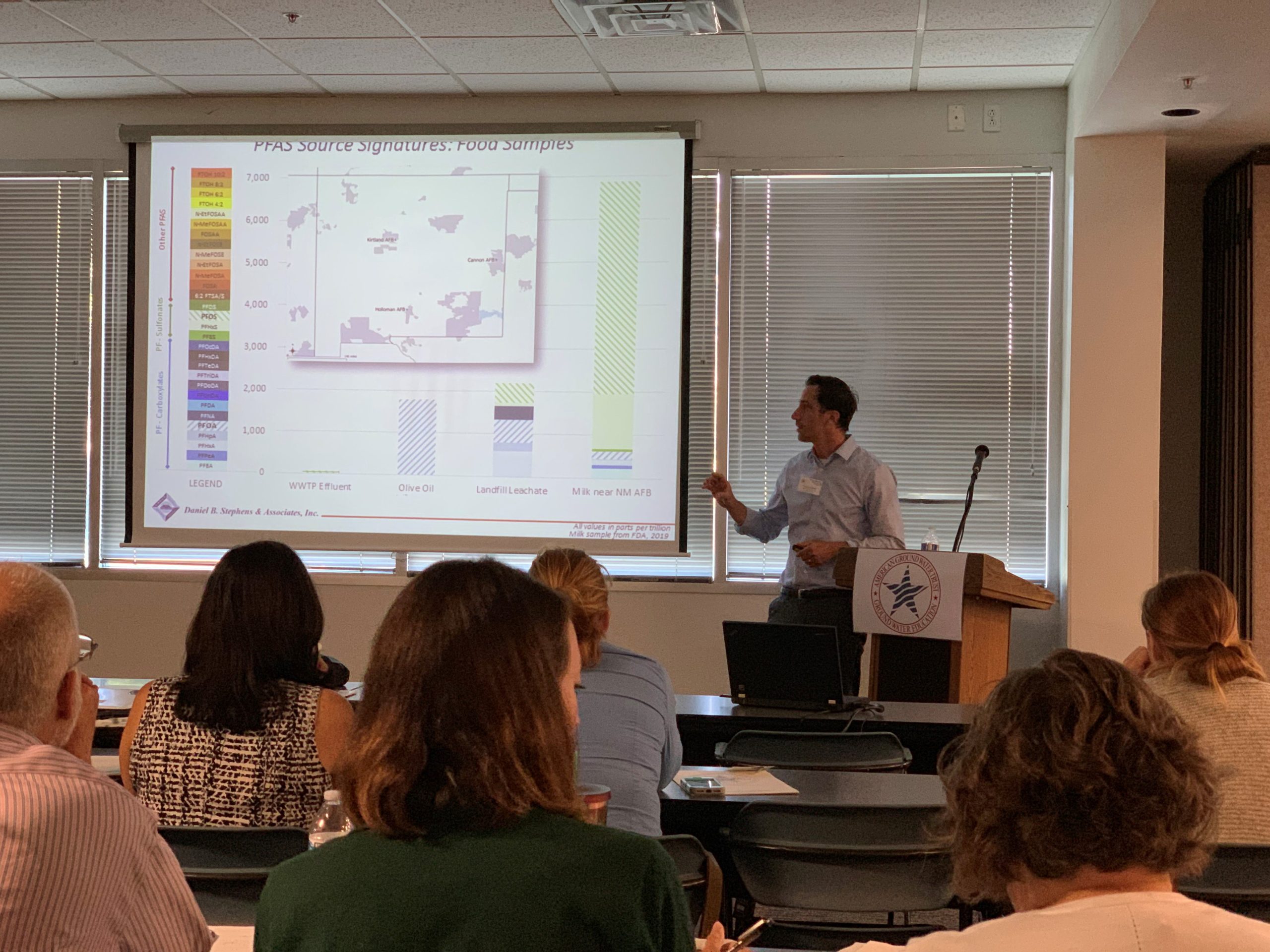
PFAS presentation

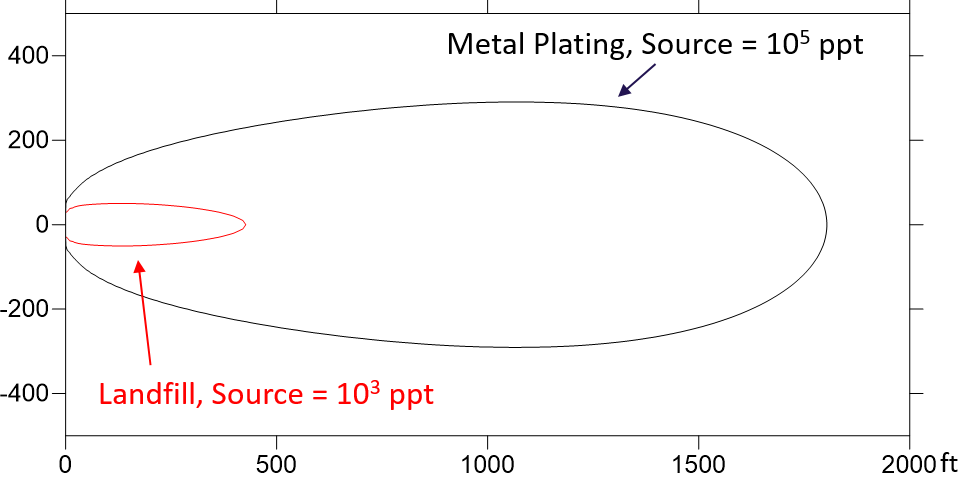
Comparison of a hypothetical PFAS groundwater plume (to 70 ng/L) associated with a metal plating source versus a landfill leachate source.

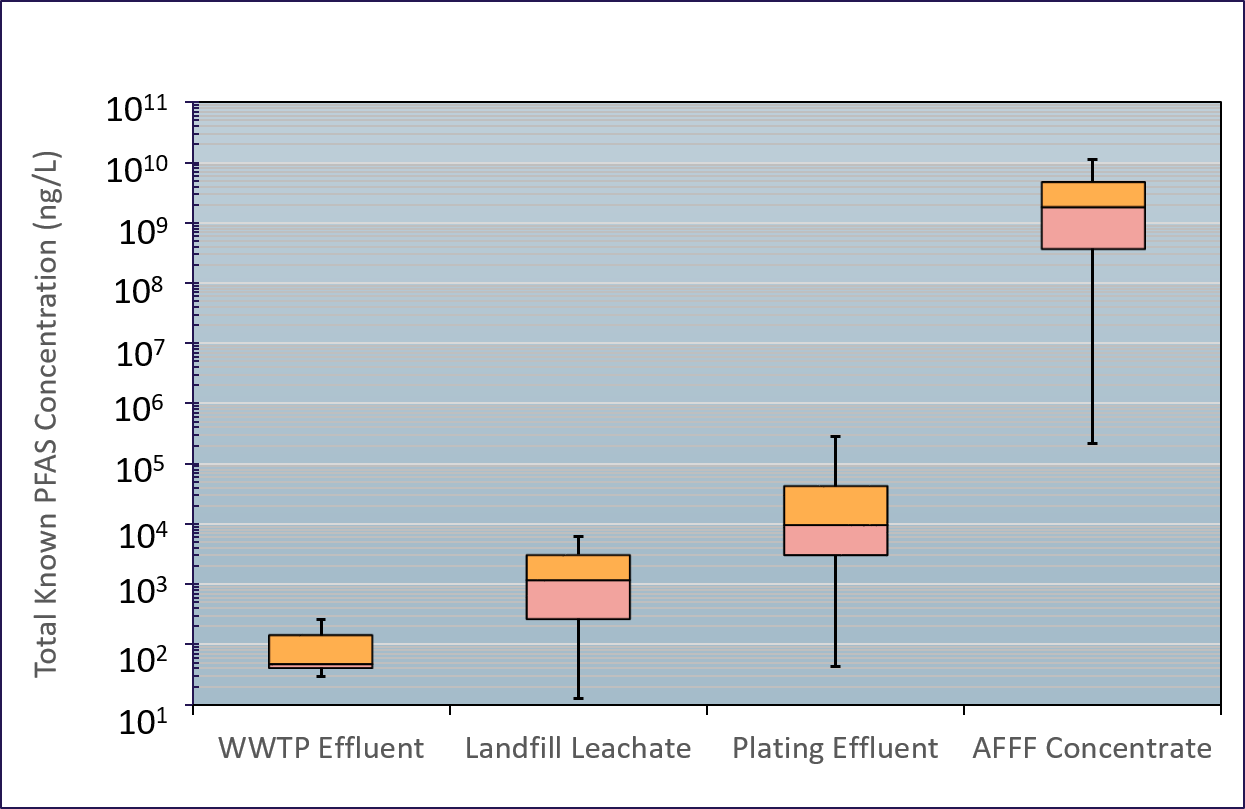
DBS&A has characterized the chemical signature and total concentration of PFAS expected from various sources, which vary significantly. This box-whisker plot shows the expected range of total known PFAS from several types of sources.

About PFAS

PFAS are a large group of manmade organofluorine compounds (>5,000) first developed in the early 1940s whose chemical structure gives them unique properties, including the ability to reduce friction and make products more resistant to stains, grease, water, and temperature. These chemical properties make them useful components in a wide array of industrial and commercial products such as textiles and leather products, metal plating, the photographic industry, photolithography, semi-conductors, paper and packaging, coating additives, non-stick cookware, food packaging, waterproof clothing, fabric stain protectors, lubricants, cleaning products, pesticides, paints, and aqueous film-forming foams (AFFF) used in firefighting.

Although there are thousands of PFAS compounds, certain PFAS have received particular regulatory attention. These key PFAS compounds are differentiated by the number of carbon atoms in the molecule and the presence of either a sulfonate or carboxylate functional group.

  • Early regulatory attention: Perfluorooctane sulfonate (PFOS) and Perfluorooctane carboxylante (PFOA)
  • Current regulatory attention in several States: PFHxS, PFBS, PFNA, PFHpA, PFDS, PFNS, PFHpS, PFPeS, PFTeDA, PFTrDA, PFDoA, PFUnA, PFDA, PFHxA, PFPeA, PFBA
  • Increasing and Future attention: Fluorotelomers and all other PFAS

Sources of PFAS to the environment include waste-water treatment plant effluent, biosolids, septic systems, landfill leachate, metal plating facility effluent, ski wax, PFAS production facilities, and AFFF. DBS&A has characterized the chemical signature and total concentration of PFAS expected from these various sources, which vary significantly.

PFAS are extremely persistent in environmental media because of the highly stable carbon-fluorine bond. PFAS are resistant to environmental degradation processes and exhibit moderate sorption to soils and sediments dependent on the individual compound properties. PFAS typically have low volatility, but can adsorb to particles and be transported long distances in air. Because different PFAS transport at different rates, the distribution of various PFAS compounds will change from the source release to a receptor some distance away such as a groundwater production well.

In May 2016, the USEPA issued lifetime drinking water health advisories (HAs) for perfluorooctanesulfonic acid (PFOS) and perfluorooctanoic acid (PFOA) of 70 nanograms per liter (ng/L), which applies to PFOS and PFOA individually or in combination. In February 2020, USEPA announced a proposal to regulate PFOS and PFOA under the Safe Drinking Water Act (which would result in a federal maximum contaminant level [MCL]) and requesting information and data on other PFAS substances.

Several states have also taken action to regulate PFAS. For example:

PFAS Project Experience

  • On behalf of the NMED, DBS&A assisted with determining the extent of the PFAS contamination performing characterization and monitoring of PFAS in surface water and groundwater at separate project areas in the vicinity of Cannon Air Force Base in Curry County and Holloman Air Force Base in Otero County, New Mexico. Upon project completion, NMED will be able to select a clean-up remedy that reduces risks to human health and the environment. Read more on the NMED website.
  • DBS&A was retained on behalf of a Class-Action group related to PFAS contamination from an industrial landfill in the Midwest. Forensic methods were used to differentiate PFAS source(s) from an industrial landfill, former wastewater treatment plant, plating facility and industrial facility. Our analysis depended on evaluating operational history associated with multiple facilities, aerial photography, PFAS occurrence and chemical signatures at groundwater monitoring and production wells, groundwater flow direction, previously-developed wellhead protection area mapping, and lithologic heterogeneity in the vicinity of a large river channel facilitating rapid groundwater transport.
  • For an environmental litigation case involving contamination of a West Virginia public service district well field by a surfactant chemical (ammonium perfluorooctanoate ([APFO], the ammonia salt of PFOA), DBS&A provided technical support in defense of the public service district. Project tasks included prediction of past and future surfactant concentrations at the well field; evaluation of surfactant migration pathways from the release point, including groundwater, vadose zone, surface water, and atmospheric pathways; and evaluation of the cost and feasibility of remediation.
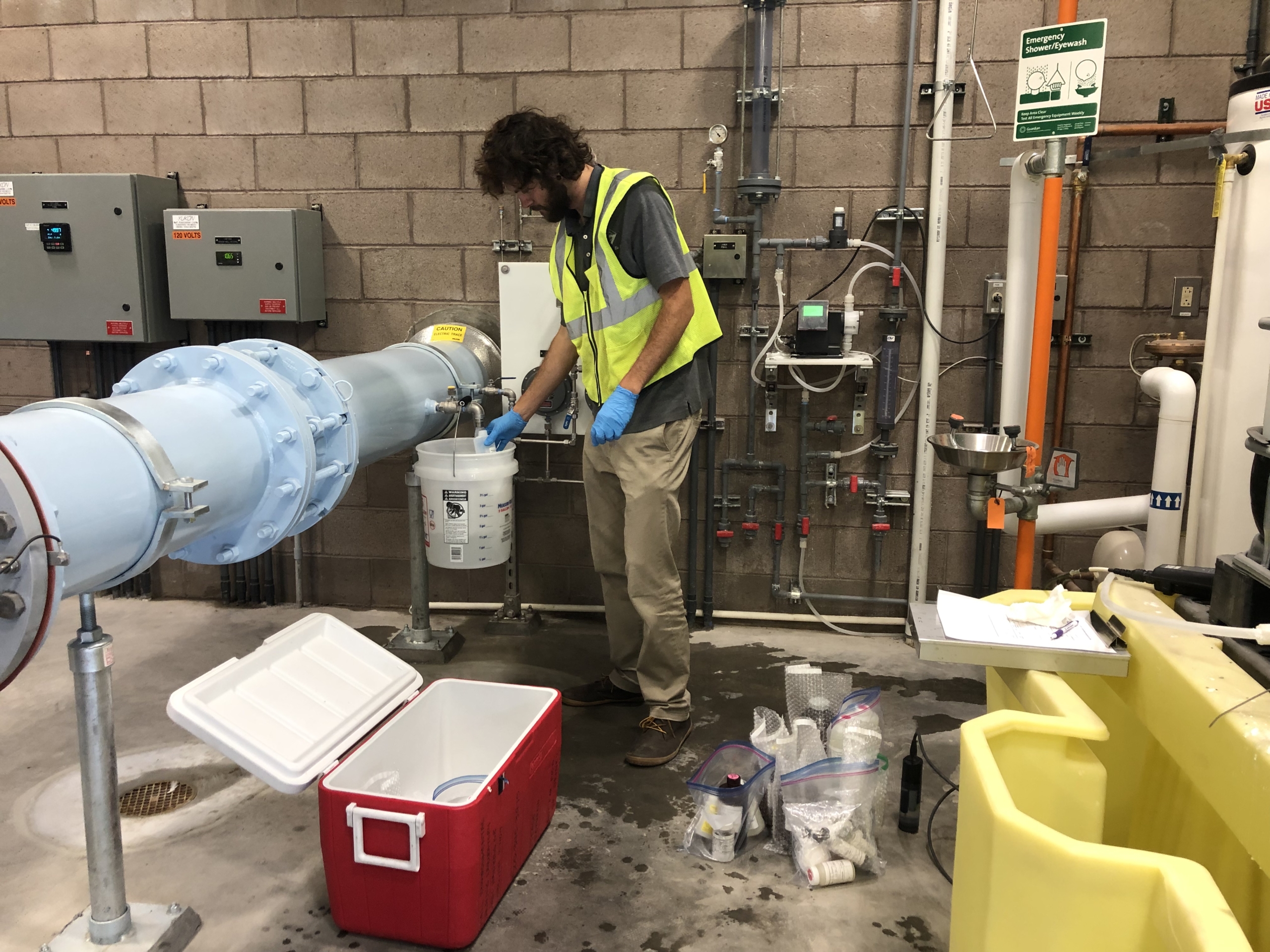
  • For the Albuquerque Bernalillo County Water Utility Authority, DBS&A collected water quality samples during recharge project demonstration testing, which included sampling for PFAS in the source water (treated surface water) and from the aquifer storage and recovery (ASR) well. DBS&A employed specialized groundwater sampling protocols when collecting the PFAS samples to avoid cross-contamination. All results from both samples were non-detect, validating the sampling methodology and strict compliance with protocols in place during sampling events.
  • As part of the Tucson Airport Remediation Project (TARP), DBS&A team members investigated of the presence of PFAS in the area in and around the Tucson International Airport (TIA), the Air National Guard training facility, and Davis-Monthan Air Force Base. The DBS&A team identified areas lacking PFAS information and conducted a well inventory to find wells to target for delineation of the plume.
  • As the environmental consultants to Republic Services Inc. in California, the DBS&A team worked with Republic’s PFAS sampling consultant to comply with an order from state regulators to test all of their landfills for PFAS. DBS&A team members reviewed the consultant work plans to ensure that the information presented accurately described the landfill and was consistent with our direct site knowledge.
  • The DBS&A team developed and applied a contaminant transport model to evaluate the potential impacts of the proposed Southeast Houghton Area Recharge Project (SHARP) on groundwater quality in Tucson, Arizona. The goal was to predict the future concentrations of PFAS in groundwater as a result of recharging the treated wastewater containing low level concentrations of PFAS. In addition, the model was used to predict the distance that PFAS would migrate in the aquifer, particularly with respect to any nearby potable supply wells.
  • During the rulemaking process, the DBS&A team was asked to participate in regulator/stakeholder meetings to create a special regulatory district that includes the Fountain/Widefield aquifer, in the vicinity of Colorado Springs. The purpose of the regulatory district was to establish a regulatory standard for PFAS compounds within a limited geographic area, in order to obtain priority Department of Defense funding for groundwater remediation at Peterson Air Force Base, the likely source of local PFAS contamination. We were asked by our client, Republic Services, to participate in meetings, and document the details of the rule making process, and evaluate potential impacts on Republic’s Fountain Landfill and other Colorado landfills.

DBS&A sampled water that was a mixture of the injected recharge source water and native groundwater, recovered from well ASR-01 at the Water Authority’s DWTP for a list of 21 PFAS.