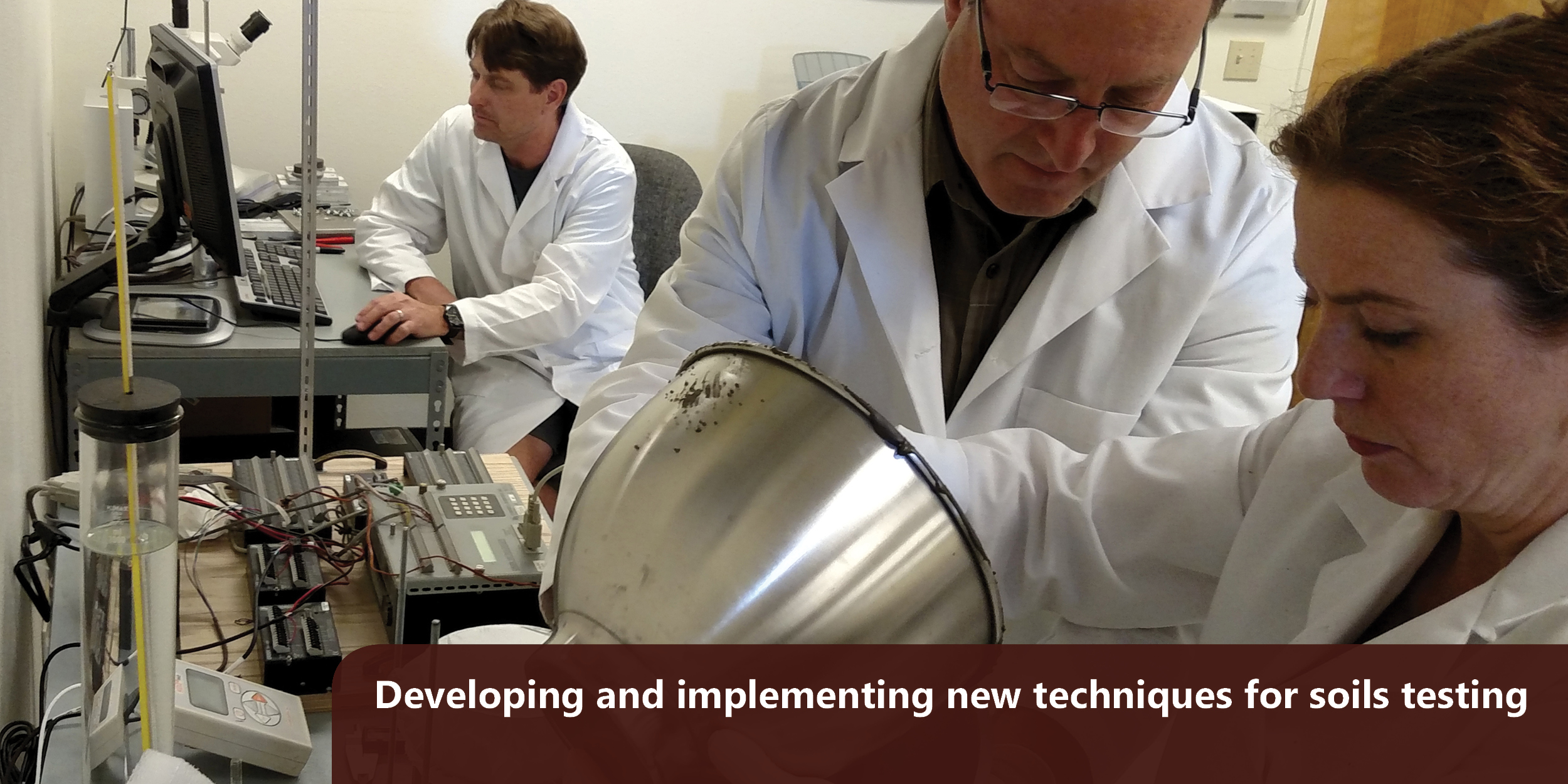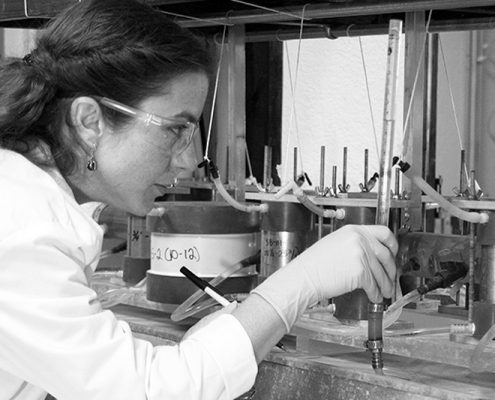

...The vadose zone is particularly important in the western U.S., where there is sometimes a deeper water table, and therefore a larger vadose zone that may substantially influence natural recharge of groundwater, as well as contaminant transport. Water may move through the vadose zone in a counterintuitive fashion. In some instances, under unsaturated conditions, water will preferentially flow through the finer-textured soils. There can also be considerable lateral water movement in an unsaturated condition where complex stratigraphy exists. These flow phenomena are controlled by the soil water characteristic and hydraulic conductivity properties of the various soil layers. These properties can be quantified through laboratory and field tests and incorporated into models to predict the direction and rate of water movement.
DBS&A has completed many challenging vadose zone projects, from modeling fate and transport of contaminants through fractured volcanic rock to field-testing the permeability of sediment underlying a uranium tailings disposal facility. DBS&A has provided expertise on technical issues related to litigation and other investigations that have included characterization of the vadose zone and site hydrogeology, numerical modeling of volatile organic compounds (VOCs), development of technical opinions regarding the source and distribution of contaminants attributed to numerous potential responsible parties (PRPs), and expert testimony.
DBS&A's vadose zone niche was established early in the company's history, based on the professional focus of DBS&A's founder, Dr. Daniel B. Stephens. Dr. Stephens has studied the vadose zone for more than 30 years and developed the vadose zone hydrology course at New Mexico Institute of Mining and Technology. This pioneering course, the first vadose zone hydrology course offered at any university at the time, covered the theory and application of vadose zone characterization and monitoring.